When youth soccer players are younger, washing soccer uniforms really doesn’t require many extra steps. Sure, there will be grass stains and dirt, but nothing a little Fels-Naptha and elbow grease can’t handle. Over the years I’ve tested a lot of methods for how to wash soccer uniforms that come home covered in mud and sweat. If you’re new to youth soccer, you might also want to read my guide to soccer socks and shin guards so you know how the gear is supposed to fit together.
However, there will come a day in your soccer mom journey when you pull a load of freshly washed clothes out of the dryer, take a deep whiff expecting that cozy just-laundered smell… and instead get hit in the face with funk.
It has probably already happened, which is why you are here.

Somewhere around the age of 8–10 is when I first noticed it with my soccer player. And it has only gotten worse as he has gotten older. He practices and plays hard, and his laundry proves it.
We live in Florida where rain, heat, and humidity make the problem even worse. So I thought I’d share my tried-and-true method for washing my son’s soccer uniforms.

Why Soccer Uniforms Stay Dirty and Smell Even After Washing
If you’re trying to figure out how to wash soccer uniforms without ruining them, the biggest challenge is usually removing sweat odor from polyester fabrics. Most soccer uniforms are made of polyester. This keeps jerseys and shorts lightweight and comfortable during play.
Unfortunately, polyester also traps bacteria.
And remember that Florida humidity, rain, and heat? Our boys sweat. My son’s clothes are often completely soaked after games and practices. That sweat bonds to the fibers and creates the perfect environment for odor-causing bacteria to grow.
Because of this, simply tossing soccer uniforms into the washer with the rest of the laundry often isn’t enough to remove the smell.
The Best Way to Wash Dirty and Smelly Soccer Uniforms
- Shake off visible dirt and grass
- Pre-treat stains and odor areas
- Use a detergent designed for synthetic fabrics
- Add a laundry sanitizer to kill bacteria
- Dry according to the care label
Washing soccer uniforms properly helps remove grass stains, sweat bacteria, and the lingering odor that often remains in synthetic sports fabrics.
Step-by-Step: How to Wash Dirty Soccer Uniforms
First, shake off mud, turf pellets, gravel, sand, or whatever other craziness made its way from the pitch onto the clothes.
True story: while watching a match from a blanket near the sideline, a small fish head once fell from the sky and landed next to my daughter. She was not amused, to say the least.
Looking up, I realized all of the field lights had osprey nests on top of them. My son’s old club played in Jacksonville Beach, and we happened to be sitting under one of the nests. Ospreys — and their chicks — are messy eaters.
So honestly, it would not surprise me if fish guts ended up on my son’s uniforms.
After removing any random debris from the uniform, I pre-treat grass and dirt stains. I prefer using a bar of Fels-Naptha because it is inexpensive, works well, and lasts forever. It’s one of my favorite laundry tricks for tough sports stains.
Once the stains are treated, I move on to odor.
One good thing that came out of the pandemic years is that we ended up with several new laundry sanitizer products.
Before 2020, I used to spray the smelly areas on my son’s clothes with Nature’s Miracle — the enzyme cleaner sold in pet stores for puppy accidents.
After 2020, I discovered Clorox Sanitizing Laundry Spray and Lysol Laundry Sanitizer.
Clorox’s fabric spray is difficult to find online now, which makes me sad. However, it can still sometimes be found in drug stores in the United States. Because it’s harder to locate, I have switched to Tide Antibacterial Fabric Spray.
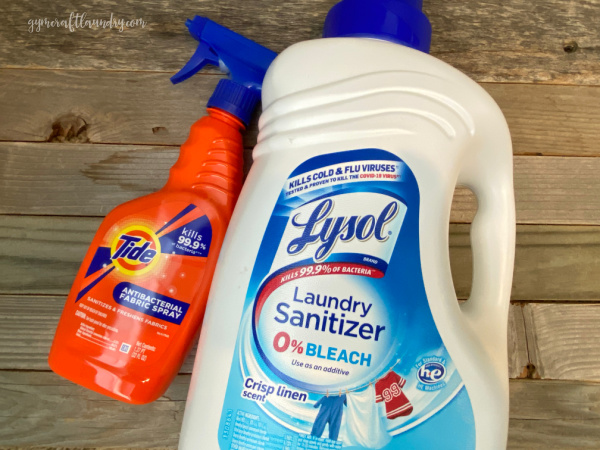
I liberally spray the neck and armpit areas of his soccer jerseys. Then I spray the crotch and back of the shorts.
Oddly enough, his socks normally don’t need pre-treatment. The moms on his team and I have noticed that ever since the uniform kit switched to Nike socks, our boys’ white socks come out of the laundry gleaming white without much effort.
If you’re also trying to figure out the right way to wear and wash them, I wrote another guide about soccer socks and shin guards that explains how the gear is supposed to fit together.
After spraying, I wash the uniforms in cold water with my normal laundry detergent.
If OxiClean’s High Def Liquid Laundry Detergent were still easy to find and reasonably priced, I would probably still be using it for sports laundry. I used to buy it at the grocery store for about $10 a bottle. Now it seems to have disappeared from store shelves and sells for nearly $70 online.
During the wash cycle, I add a capful of Lysol Laundry Sanitizer to the liquid fabric softener dispenser on my washing machine so it releases at the end of the cycle.
Then I dry the uniforms as normal. For soccer uniforms, I usually use the dryer just like I do with the rest of our laundry.
How to Remove the Smell From Soccer Uniforms That Still Stink After Washing
Sometimes my method doesn’t completely work the first time. Soccer uniforms that are thrown into a bag in my son’s car and forgotten — only to be discovered the night before a game — may not come clean on the first pass.
If your child’s soccer uniform still smells after washing, the problem is usually trapped bacteria in the polyester fabric. Athletic materials hold onto sweat differently than cotton, which is why a normal wash cycle sometimes is not enough.
It can also happen when uniforms sit too long before washing, or when too much detergent leaves buildup behind.
If this keeps happening, focus on pre-treating the worst odor areas, using a laundry sanitizer, washing in cold water, and avoiding more detergent than you actually need.
In really stubborn cases, a second round of spraying followed by another wash — again using the Lysol sanitizer in the rinse cycle — usually solves the problem.
What I Keep in My Soccer Laundry Kit
Over the years I’ve ended up with a small “soccer laundry kit” next to my washing machine. These are the things I reach for almost every week during soccer season.
- A bar of Fels-Naptha for grass stains
- An antibacterial fabric spray for the worst odor areas
- Laundry sanitizer for the rinse cycle
- A small brush for stubborn dirt around numbers and seams
Having everything in one place makes it much easier to deal with muddy uniforms after a long practice or late-night game.

- Kills 99.9 percent of bacteria when used as directed
- Sanitizes and freshens fabrics
- Helps fight odor-causing bacteria

- LAUNDRY DETERGENT ADDITIVE: Add Lysol Laundry Sanitizer to every wash, in the fabric...
- COLOR SAFE BLEACH ALTERNATIVE: Lysol Laundry Sanitizer is a bleach alternative that...
- LYSOL LAUNDRY SANITIZER: Better than in-wash scent boosters that just mask bad odors....

- Then wash your clothes as you normally would and say farewell to tough stains for good
- All you’ve got to do is rub the stain with a wet bar of Purex Fels-Naptha and let it sit...
- It is an effective soil and stain remover; Ideal for prewash spotting; of a kind product -...
Laundry Tips for Busy Soccer Parents
After years of dealing with muddy fields, sweaty practices, and forgotten gear bags, these small habits have made soccer laundry much easier in our house.
- Don’t let uniforms sit in a sealed bag. If you can’t wash them right away, at least pull them out and let them air dry.
- Turn jerseys and shorts inside out before washing so sweat and body oils can rinse away more easily.
- Avoid using too much detergent. Athletic fabrics hold onto detergent residue, which can actually trap odor.
- Wash uniforms separately from towels or heavy cotton clothing. Mixing fabrics can make it harder to fully rinse synthetic sports materials.
- Keep a small stain bar like Fels-Naptha near your washing machine so you can treat grass stains as soon as the uniform comes off the field.
After a while, soccer laundry just becomes part of the rhythm of the season.
Bonus Tip: A common tip you’ll see floating around social media involves bringing the offending soccer uniforms to a self serve car wash to spray it with the pressurized sprays! I’ve seen this tip time and time again over the years and luckily I’ve never encountered enough dirt to resort to driving to a car wash!
Once soccer season gets busy, having a simple routine for washing uniforms makes life a lot easier for everyone.
For More Soccer mom hacks visit our Tips for new Soccer Moms!
Leave a Reply